






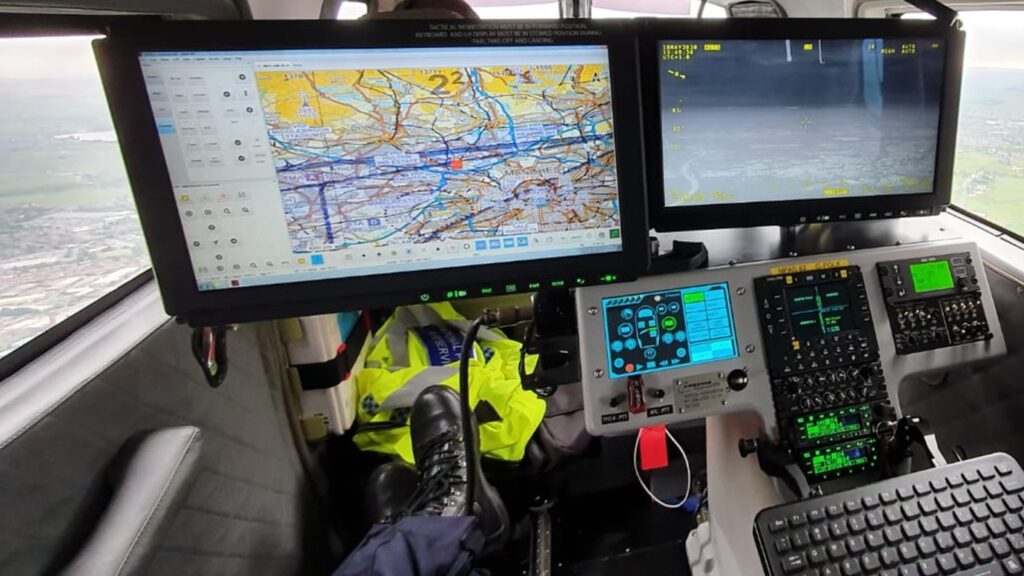

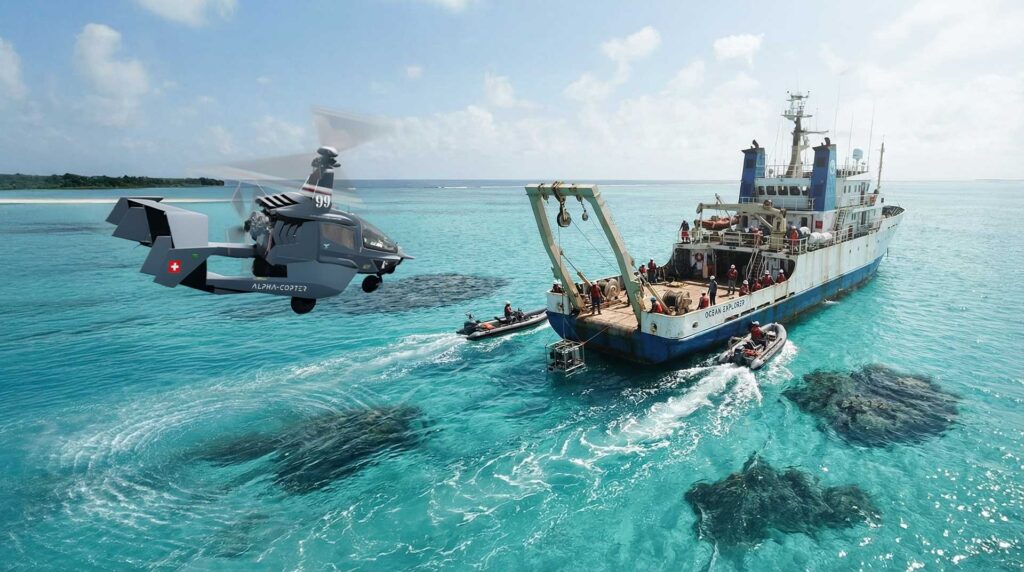


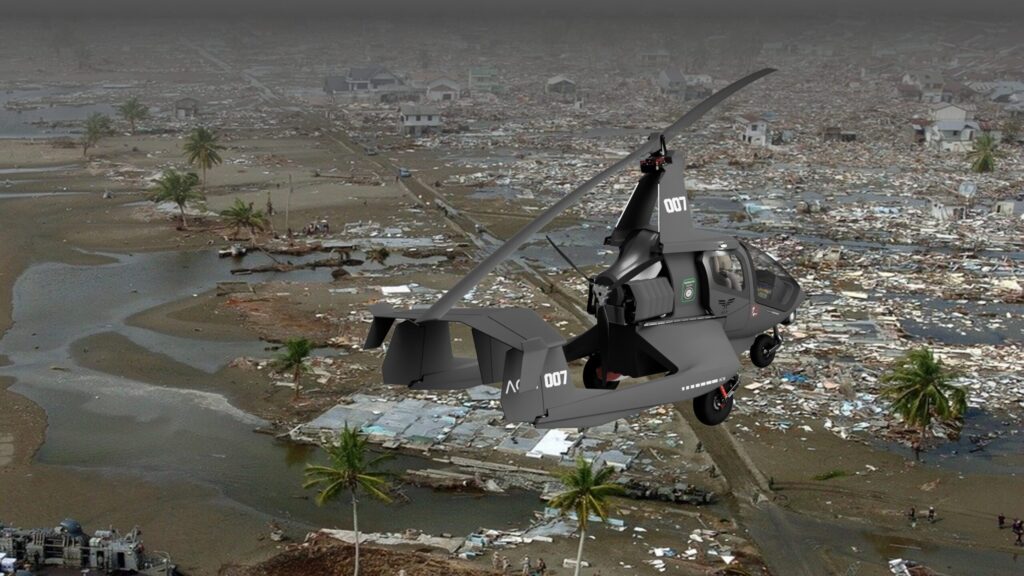

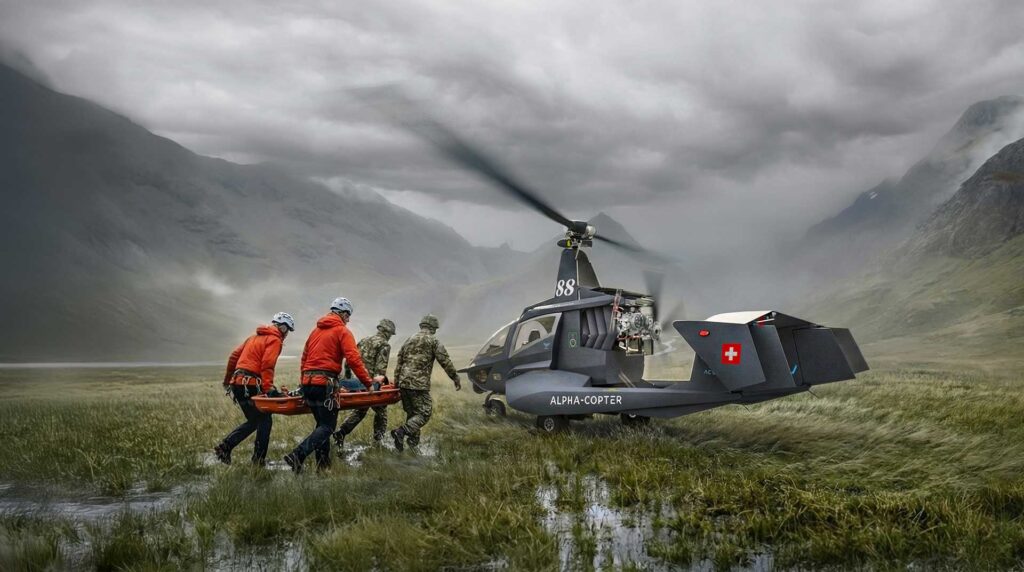


Vorbereitungsphase
- Überprüft Luftfahrzeuge und Sicherheitsausrüstung.
- Erstellt Flugpläne und koordiniert die Logistik.
- Plant Wartung und Reparaturen.
- Führt Briefings vor dem Flug mit Besatzung und Passagieren durch.
- Weist das Bodenpersonal in die Sicherheitsverfahren ein.
Einstieg in den Flug
- Hält die Ladung fest und sichert sie.
- Kommuniziert mit ATC und Bodeneinheiten.
- Überwacht das Wetter und aktualisiert die Flugpläne.
- Passt Flugpläne nach Bedarf an.
- Überprüft, ob alle Sicherheits- und Funktionsprüfungen abgeschlossen sind.
Während des Fluges
- Führt das Flugzeug sicher und gibt den Passagieren ein Gefühl der Sicherheit.
- Aktiviert die Missionssysteme, falls zutreffend.
- Behält das Situationsbewusstsein bei.
- Behebt Probleme und verwaltet Systemausfälle.
- Tanken und Zahlungsabwicklung unterwegs.
Notfälle und kritische Operationen
- Überwacht alle Systeme und verwaltet kritische Ausfälle.
- Kümmert sich um unvorhergesehene Zwischenfälle während des Fluges.
- Führt Notfallverfahren unverzüglich aus.
- Koordiniert sich mit der Bodenunterstützung für Notfälle.
- Evakuiert das Flugzeug, falls erforderlich.
Aktivitäten nach dem Flug
- Führt Nachbesprechungen durch und protokolliert Einsätze.
- Aktualisierung von Wartungs- und Reparaturplänen.
- Erfasst Vorfälle und Flugdaten.
- Vervollständigt die Dokumentation zur Einhaltung der Vorschriften.
- Koordiniert Inspektionen und Reparaturen nach dem Flug.
Zusätzliche Verantwortlichkeiten
- Mentor für jüngere Besatzungsmitglieder.
- Gewährleistet die Einhaltung der Vorschriften.
- Betreuung der Fahrgäste und Bearbeitung von Anfragen.
- Fördert die Marke und die Dienstleistungen des Unternehmens.
- Trägt zu einem geschlossenen Feedbackkreislauf für Sicherheit und Ausbildung bei.
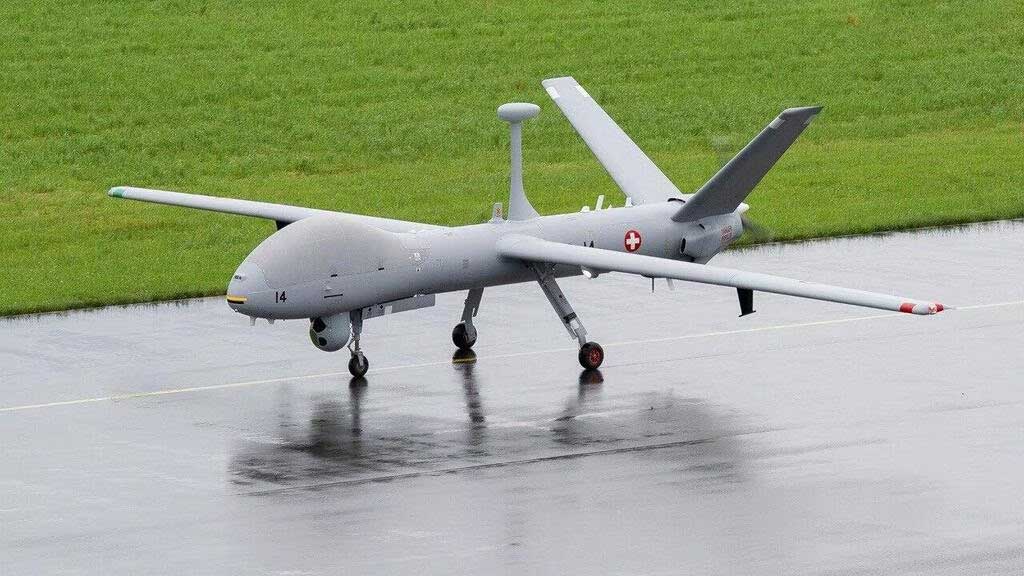
Für hochwertige strategische Aufklärungsmissionen und Operationen mit großer Reichweite werden häufig moderne Drohnen eingesetzt. Die Hermes 900, die von der Schweizer Luftwaffe betrieben wird, hat einen Preis von rund 40 Mio. USD pro Stück und bietet eine geringere Nutzlast als die .
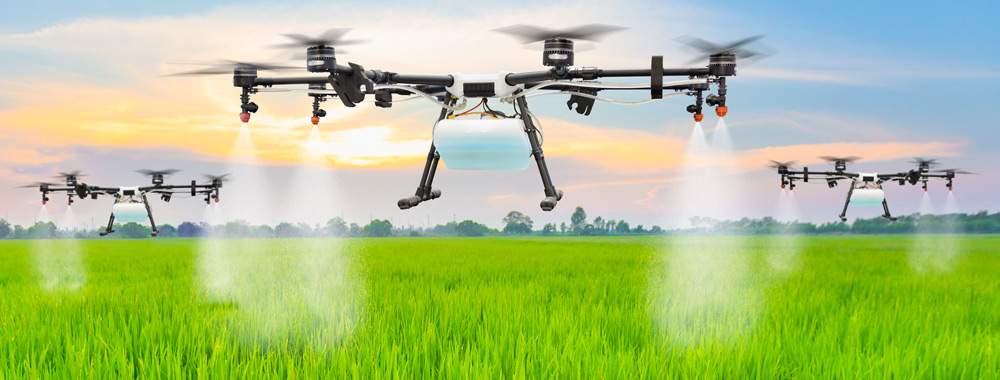
GPS-gesteuerte, vollautomatische Pflanzenschutzdrohnen mit geringer Reichweite können Chemikalien genau dort ausbringen, wo sie benötigt werden, und arbeiten nur wenige Meter über dem Boden, ohne mit dem Luftverkehr in Konflikt zu geraten. Aus Sicherheitsgründen werden diese Drohnen in der Regel nur von zertifizierten (staatlichen) Stellen betrieben.
Team stellt sich eine Zukunft vor, in der Flugzeuge, Drohnen und andere Technologien am Himmel miteinander verschmelzen.
Beim Drohnenbetrieb wird die Flugkontrolle an eine entfernte Bodenstation übertragen, aber alle anderen traditionellen Aufgaben des Piloten bleiben bestehen. Daher erfordert der Betrieb von Drohnen zusätzliches Fachpersonal, fortschrittliche Technologien und eine separate Logistik, Koordination und Führung.
Infolgedessen ist der Betrieb von Drohnen komplexer und kostspieliger und erfordert eine ausgeklügelte Koordination, sichere und ausfallsichere Flugsteuerungs- und Kommunikationssysteme, Sense-and-Avoid-Technologie sowie verbesserte Sicherheitsprotokolle und Redundanz, um potenzielle Ausfälle und Risiken zu mindern.
Hohe Effektivität, Effizienz und Widerstandsfähigkeit hängen von der Interoperabilität der Systeme, gemeinsamen Operationen und einer optimalen Mischung von Technologien ab, die auf die Anforderungen der Mission, die Beschränkungen und die langfristigen Bedürfnisse und Fähigkeiten des Betreibers oder der Nation abgestimmt sind.
Daher übersehen Diskussionen über Drohnen, die pilotengesteuerte Flugzeuge ersetzen, den grundlegenden Punkt in der Gesamtanalyse. Zusammenfassend lässt sich sagen, dass die Vorteile des Flugbetriebs mit Piloten in den meisten Anwendungsfällen die Vorteile von Drohnen ohne Piloten überwiegen.
Die Radargrafiken geben einen Überblick über die Leistung und Eignung für verschiedene Einsätze. Der Vergleich mag zwar wie "Äpfel und Birnen" erscheinen, hebt aber die Stärken der und zeigt deutlich seine Vielseitigkeit und seinen Nutzen. Die Diagramme sind qualitativ zu interpretieren; für genauere Informationen wenden Sie sich bitte an uns.
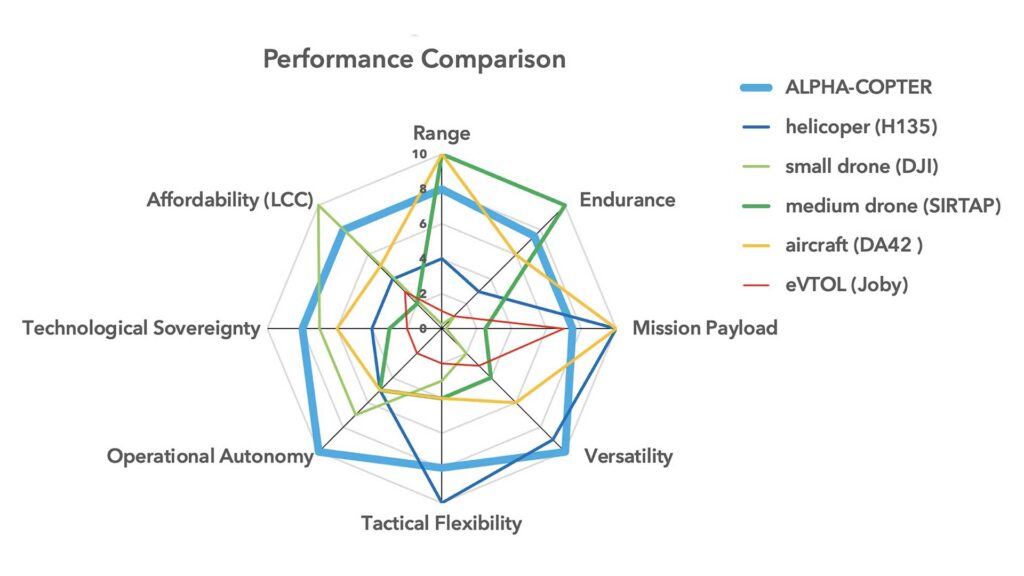
Reichweite: Die maximale Entfernung, die ein Fahrzeug mit einer einzigen Ladung oder einer Tankfüllung zurücklegen kann. Der Zweimotorenmotor können weit über die Reichweitenbeschränkungen herkömmlicher Hubschrauber hinaus operieren.
Ausdauer: Die Gesamtzeit, die ein Fahrzeug in der Luft bleiben kann, bevor es aufgetankt oder nachgeladen werden muss, einschließlich der Reservezeit. übertrifft alle Hubschrauber an Ausdauer.
Nutzlast der Mission: Das maximale Gewicht, das ein Fahrzeug tragen kann, einschließlich Passagiere, Fracht, Missionsausrüstung und Waffensysteme. verfügt über eine mittlere Nutzlastkapazität, die ideal für die Unterstützung mobiler Einheiten ist.
Vielseitigkeit: Die Fähigkeit, verschiedene Arten von Missionen ohne erhebliche Ausfallzeiten für die Neukonfiguration durchzuführen. ist auf Vielseitigkeit ausgelegt und kann sich an wechselnde Einsatzanforderungen anpassen.
Taktische Flexibilität: The ability to quickly adapt in-flight to different mission types and operational changes. can rapidly adjust in real-time with its onboard pilot and tactical flight officers.
Operative Autonomie: Das Ausmaß, in dem ein Fahrzeug unabhängig und ohne externe Steuerung oder Infrastruktur arbeiten kann. kann von einer vorgeschobenen Operationsbasis (Forward Operating Base, FOB) aus operieren und so die Reichweite von Spezial- oder Expeditionskräften vergrößern.
Technologische Souveränität: Die Fähigkeit, Technologie selbständig zu entwickeln, zu nutzen und zu kontrollieren.
Volle Kontrolle: ohne fremde Abhängigkeiten oder Schwachstellen arbeiten kann.
Erschwinglichkeit (LCC): Die Gesamtbetriebskosten über den gesamten Lebenszyklus des Fahrzeugs. bietet Lebenszykluskosten, die mit denen von Bodenfahrzeugen vergleichbar sind, und nicht mit denen von Flugzeugen.
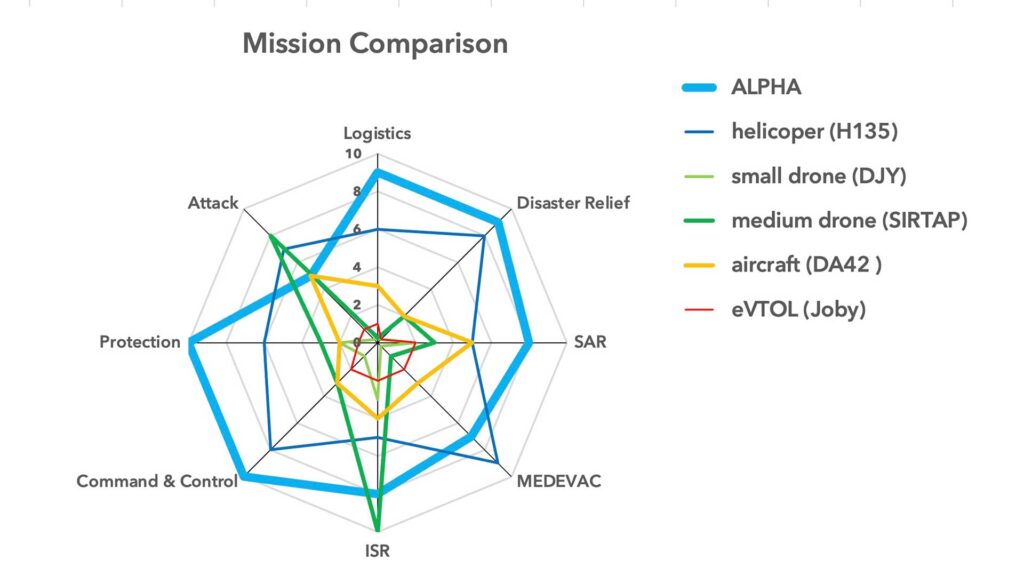
Logistik: Die Bewegung und Lagerung von Waren und Personal für effiziente Abläufe. erleichtert den schnellen Versorgungstransport in schwierigen Umgebungen.
Katastrophenhilfe: Humanitäre Unterstützung während und nach Katastrophen, wenn die traditionelle Infrastruktur beeinträchtigt ist. ist darauf ausgelegt, Hilfe unter schwierigen Bedingungen zu leisten.
SAR (Suche und Rettung): Einsätze zum Auffinden und zur Unterstützung von Personen in Not. ist für umfangreiche Suchvorgänge in riesigen Gebieten ausgelegt.
MEDEVAC (Medizinische Evakuierung): Transport von verletzten oder kranken Personen zu medizinischen Einrichtungen. sorgt mit seiner Reichweite und seinen schnellen Reaktionsmöglichkeiten für rechtzeitige medizinische Evakuierungen.
ISR (Intelligence, Surveillance, and Reconnaissance): Die Sammlung und Analyse von Informationen für strategische Entscheidungen. führt diskrete Operationen durch und sammelt wertvolle Informationen, ohne potenzielle Bedrohungen zu alarmieren.
Befehl und Kontrolle: Lenkung der Kräfte und Ressourcen zur Erreichung der Ziele. verbessert das Situationsbewusstsein und unterstützt bis zu 2 taktische Flugoffiziere an Bord.
Schutz: Schutz von Personal und Ressourcen vor Bedrohungen. ist auf Sicherheits- und Anti-Drohnen-Missionen zugeschnitten und gewährleistet sicheren Transport und Konvoibegleitung in Hochrisikogebieten.
Attacke: Offensivmaßnahmen gegen Ziele, um militärische Ziele zu erreichen. 'ermöglichen Präzisionsschläge, um Bedrohungen zu neutralisieren und gleichzeitig den Kollateralschaden und den militärischen Fußabdruck zu minimieren.
Unser Team sieht die Zukunft des Flugbetriebs als ein integriertes 'System von Systemen' in allen Bereichen. Daher ist es von entscheidender Bedeutung, die geeignete Technologie für jeden Auftrag um ein optimales Gleichgewicht zwischen Sicherheit, Wirksamkeit, Kosteneffizienz, Belastbarkeit, Nachhaltigkeit und anderen Parametern herzustellen.
, Hubschrauber oder Drohne?
Vergleichen wir die verschiedenen Technologien und betrachten wir ein Einsatzszenario, bei dem ein bestimmtes Gebiet überwacht werden muss, um Schmuggel und Gebietsverletzungen zu verhindern.
- Sicherheitslage: Ausgerichtet auf militärische Operationen außerhalb des Krieges (MOOTW)
- Missionen: Überwachung, Patrouille, bewaffnetes Abfangen
- Einsatzgebiet: Einschließlich Flüge über Stadt, Meer und Wald; zweimotorige Flugzeuge erforderlich
- Dauer: Kontinuierliche Präsenz für einen Monat, 24/7
- Nächstgelegener Flugplatz: 200 km vom Einsatzgebiet entfernt (ToO)
- FOB (Forward Operating Base) mit einer TLZ (Temporary Landing Zone, z. B. ein Fußballfeld oder ein Strandbereich), die 100 km vom ToO entfernt ist.
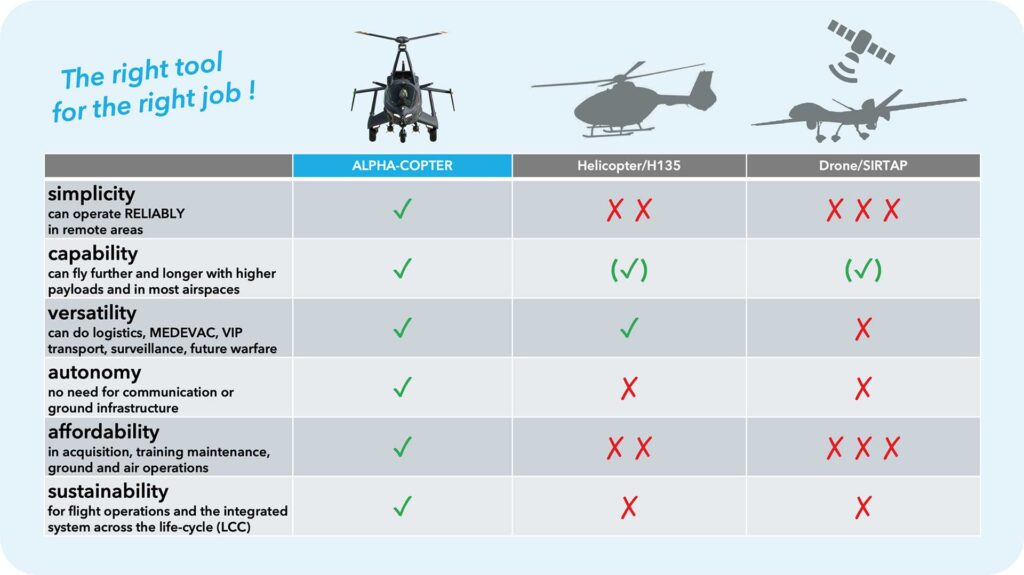
| (twin-engine) | Hubschrauber (z.B. H135) | Drohne (z.B. MALE/SIRTAP) |
|---|---|---|
| Betrieb und Wartung auf FOB-Basis | Kann an der FOB aufgetankt werden; erfordert Wartung auf dem Flugplatz | Erfordert Flugplatz und Kommunikationsinfrastruktur |
| Ausdauer: 8 h; Geschwindigkeit: ~200 km/h; Reichweite: 1.500 km | Ausdauer: 3 h; Geschwindigkeit: ~200 km/h; Reichweite 600 km | Ausdauer: 18 h; Geschwindigkeit: ~200 km/h; Reichweite: 2.200 km |
| Betriebliche Verfügbarkeit: 90% | Betriebliche Verfügbarkeit: 70% | Betriebliche Verfügbarkeit: 80% |
| 6 Stunden Orbiting im Einsatzgebiet (ToO), mit 1 Stunde Pendeln und 1 Stunde Reserve. | 1 Stunde Orbiting im Einsatzgebiet (ToO), mit 1 Stunde Pendeln und 1 Stunde Reserve. | 15 Stunden Orbiting im Einsatzgebiet (ToO), einschließlich 2 Stunden Pendeln und 1 Stunde Reserve. |
| 120 Flugeinsätze pro Monat mit (30d*24h/6h) 840 Stunden | 720 Flugeinsätze pro Monat mit (30d*24h/1h) 1.440 Stunden | 48 Flugdiensteinsätze pro Monat mit (30d*24h/15h) 816 Stunden |
| Mindestanforderungen: 3 ALPHA-COPTERs erforderlich | Mindestanforderungen: 4 Hubschrauber erforderlich | Mindestanforderungen: 3 Drohnensysteme erforderlich |
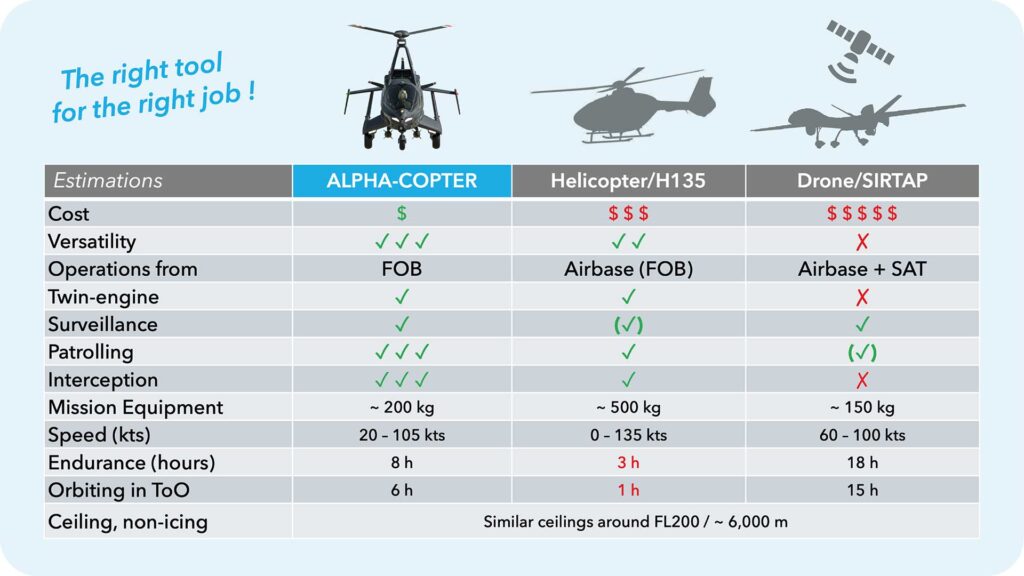
The three distinct systems are designed with different strengths. stands out for its versatility and cost-efficiency, while helicopters excel in hovering capabilities, and certain drones provide extended flight durations. It's important to note that international rules of engagement typically restrict drones from conducting interception missions; however, they are often very effective in surveillance and attack operations.
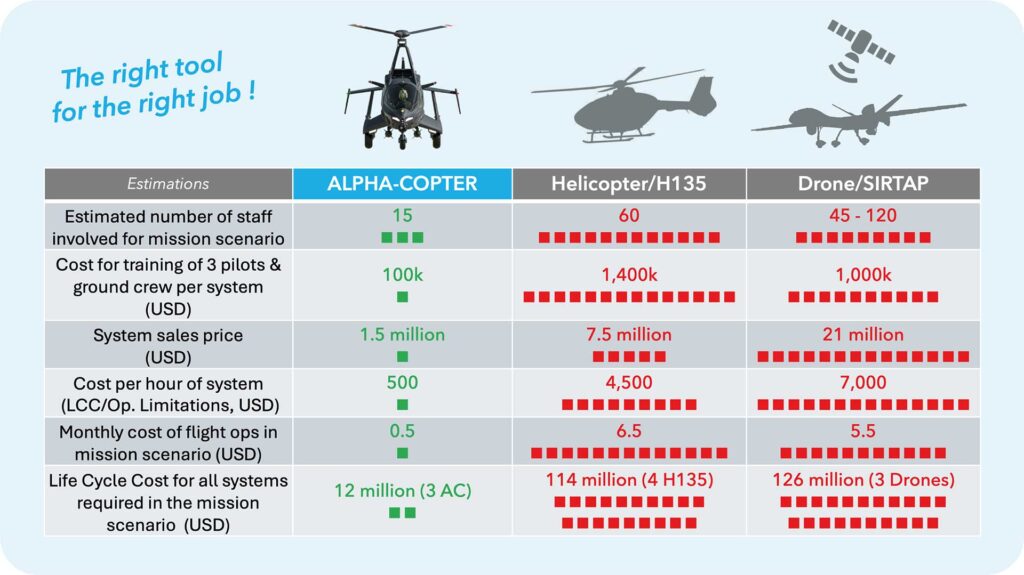
Bemerkung
Die LCC (Life Cycle Cost) umfassen alle Ausgaben wie Treibstoff, Wartung, Zusatzausrüstung, Ausbildung und Gehälter der Besatzung, Hangarkosten, Versicherung, Abschreibung und andere damit verbundene Kosten, die während der Lebensdauer des Objekts anfallen.
Optimierte Multiplattform-Luftoperationen
In zukünftigen MOOTW- und asymmetrischen Kriegsszenarien ist der dynamische und flexible Einsatz von Luftstreitkräften entscheidend. Dieser integrierte Ansatz optimiert die Effektivität, Effizienz und das Ressourcenmanagement. Er gewährleistet auch eine angemessene Deeskalation und verbessert die Skalierbarkeit der Kräfte.
Die fungiert als wichtiger Kraftvervielfältiger. Er wird in den meisten Lufträumen eingesetzt und ist mit einem Piloten und ein bis zwei taktischen Flugoffizieren besetzt. Seine Leistungskapazität, die der eines zweimotorigen Hubschraubers ähnelt, unterstützt Drohnenstörsender, Waffensysteme und verschiedene Sensorkapseln. Dies ermöglicht eine integrierte Datenerfassung und -verarbeitung an Bord.
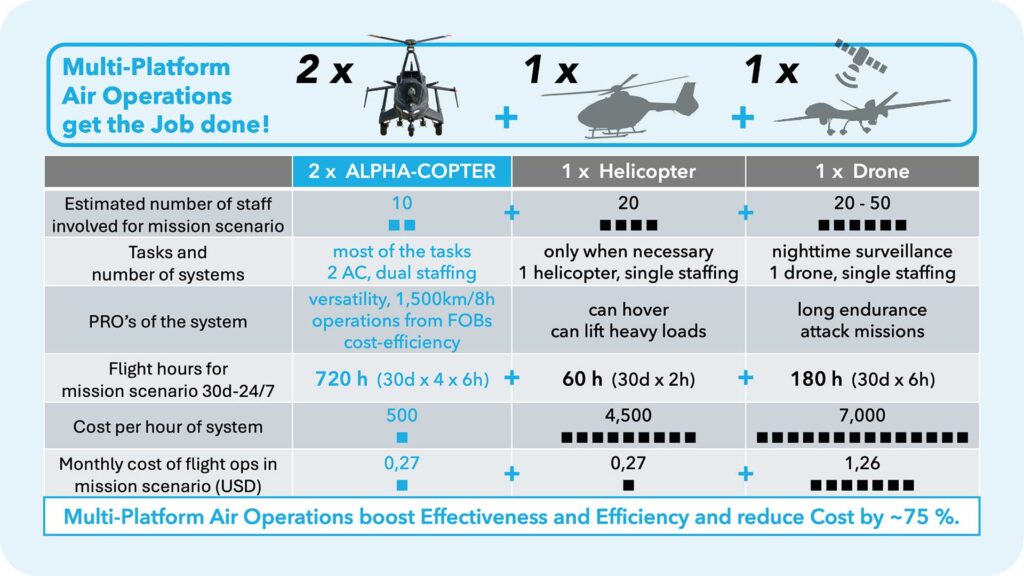
This capability directly enhances the Digital Common Operational Picture (COP), a critical enabler for Network-Centric Warfare (NCW). Consequently, the reduces the operational burden on other platforms. A typical strategy uses for patrolling, force projection, and interception tasks.
Drohnen dienen der (nächtlichen) Überwachung, insbesondere wenn die Anforderungen an das Abfangen geringer sind. Hubschrauber bleiben in ständiger Bereitschaft für Aufgaben, die schwere Lasten oder Schwebeflugfähigkeiten erfordern. Diese kombinierte Strategie garantiert eine anhaltende Einsatzdauer und den Erhalt strategischer Werte.
Effizienz ist die Fähigkeit, ein Maximum an Produktivität zu erreichen und gleichzeitig die Verschwendung von Ressourcen zu minimieren. Der Schwerpunkt liegt dabei auf der Optimierung von Prozessen, d. h. auf dem effektiven Einsatz von Kraftstoff, Ausrüstung, Geld, Arbeitskräften usw.
Effektivität, Der Schwerpunkt liegt hingegen auf dem erfolgreichen Erreichen der angestrebten Ziele, indem sichergestellt wird, dass die Aufgaben wie gewünscht erledigt werden.
Kombination von Effizienz und Effektivität
Sicherstellung eines ressourceneffizienten und zielgerichteten Betriebs - tut besser abschneiden als Hubschrauber?
zeichnet sich in fast allen Szenarien durch hohe Effizienz aus, mit Ausnahmen beim Transport schwerer Lasten oder beim Schwebeflug. Untersuchungen bei militärischen und zivilen Betreibern zeigen jedoch, dass diese speziellen Einsätze relativ selten sind und je nach Betreiber nur bei 10% bis 40% der Hubschrauberflüge vorkommen.
Was die Wirksamkeit betrifft, so ist die zeichnet sich durch längere Flüge aus und bietet aufgrund seines geringen Treibstoffverbrauchs eine größere Nutzlastkapazität sowie die Möglichkeit, doppelt so lange und doppelt so weit zu fliegen wie Hubschrauber. Dies wird in der nebenstehenden Grafik veranschaulicht:

Über die operative Leistung hinaus, bietet auch erhebliche Vorteile bei der langfristigen Kosteneffizienz hinsichtlich der Lizenzierung. Die Ausbildung zum Piloten dauert etwa drei Monate und kostet rund 20.000 USD - ein Bruchteil der Kosten und des Zeitaufwands für die Ausbildung eines Hubschrauberpiloten mit einer zweimotorigen Berechtigung.
Der Aufbau eines soliden Personalpools erfordert jedoch eine strategische Planung, die eine frühzeitige Einbindung der Interessengruppen, eine Anpassung der Vorschriften und eine strenge Auswahl der Ausbilder und des künftigen Boden- und Flugpersonals voraussetzt. Trotz beschleunigter individueller Qualifizierung erfordert der Aufbau einer belastbaren Pilotenpipeline eine umfassende organisatorische und didaktische Infrastruktur - ein mehrjähriges Unterfangen.
 English
  German
  French
  Spanish
  Indonesian