




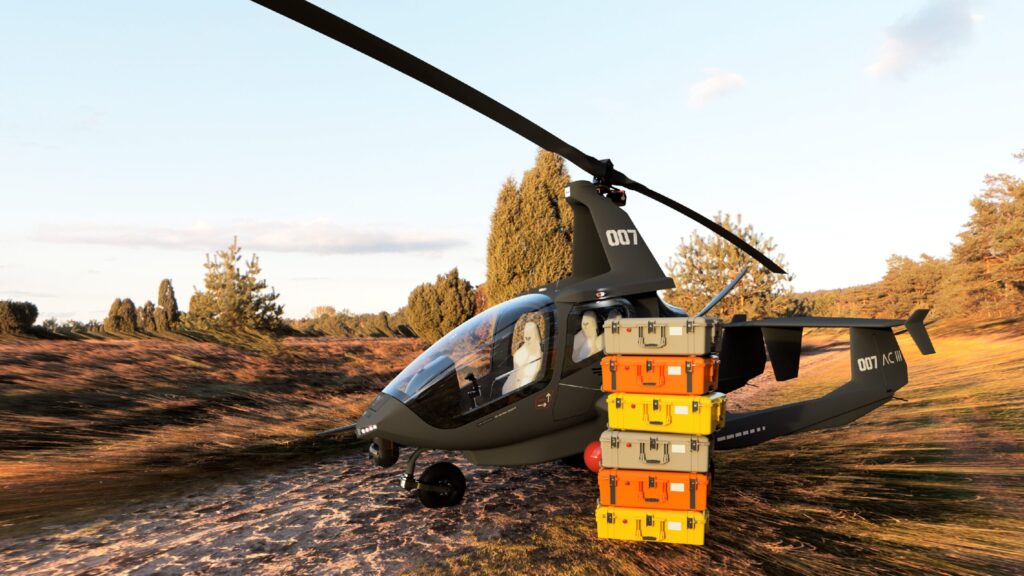

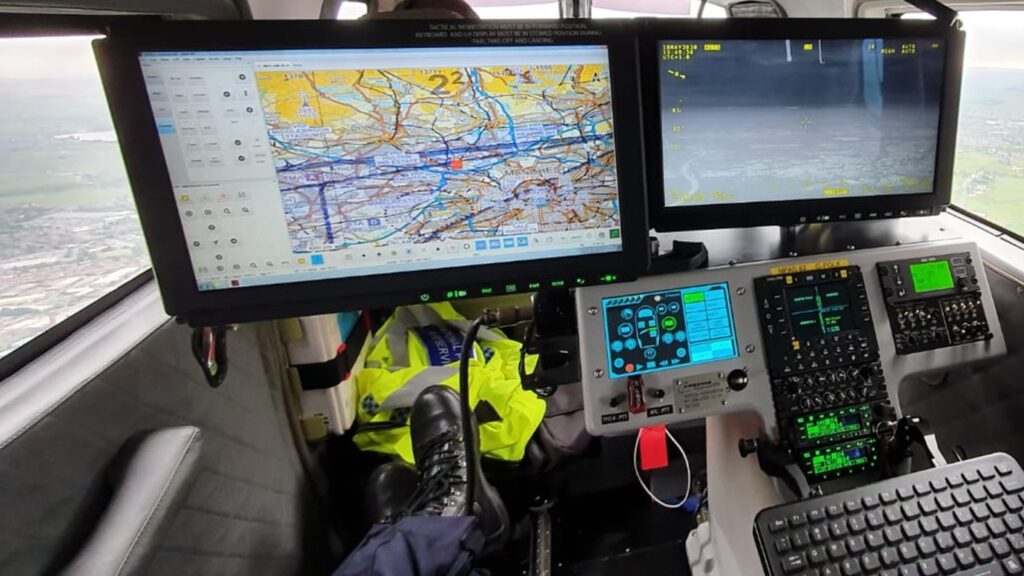

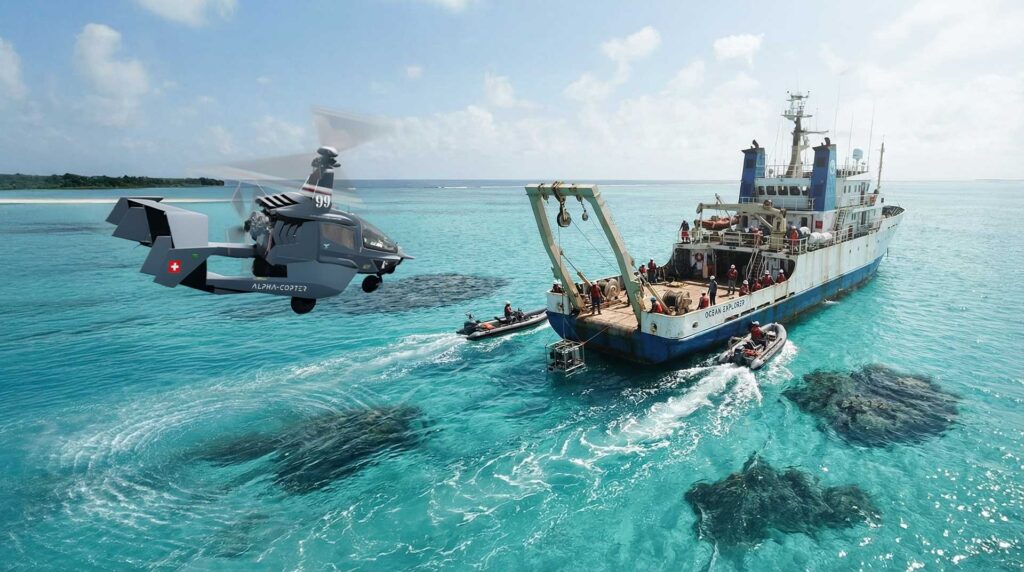


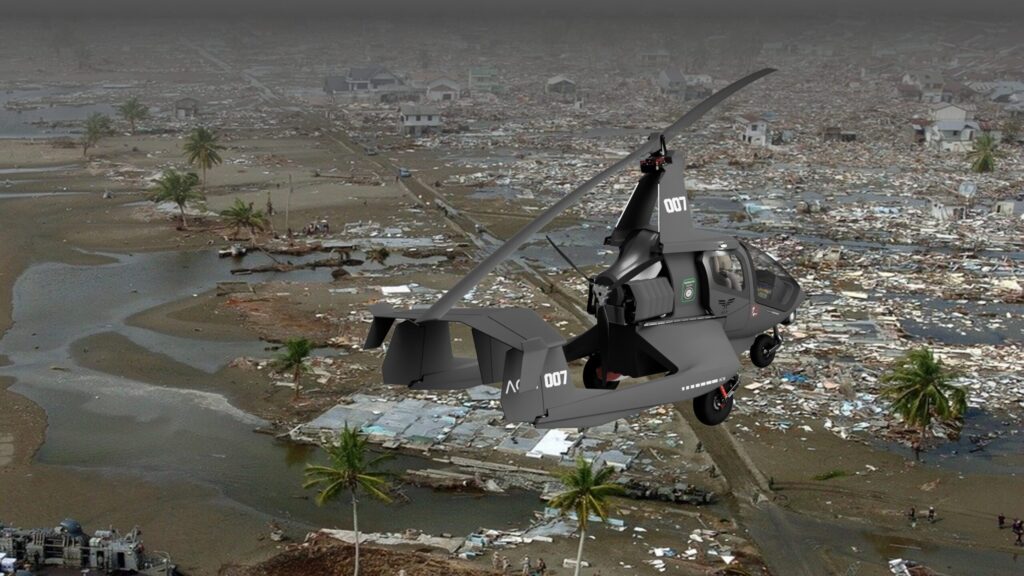



Tahap Persiapan
- Memeriksa pesawat dan peralatan keselamatan.
- Mengarsipkan rencana penerbangan dan mengoordinasikan logistik.
- Menjadwalkan pemeliharaan dan perbaikan.
- Melakukan pengarahan pra-penerbangan dengan awak dan penumpang.
- Memberi pengarahan kepada kru darat tentang prosedur keselamatan.
Masuk ke dalam Penerbangan
- Menangani kargo dan mengamankannya.
- Berkomunikasi dengan ATC dan unit darat.
- Memantau cuaca dan memperbarui rencana penerbangan.
- Menyesuaikan rencana penerbangan sesuai kebutuhan.
- Memverifikasi bahwa semua pemeriksaan keselamatan dan operasional telah selesai.
Selama Penerbangan
- Mengoperasikan pesawat dengan aman dan membuat penumpang merasa aman.
- Mengaktifkan sistem misi jika ada.
- Mempertahankan kesadaran situasional.
- Menyelesaikan masalah dan mengelola kegagalan sistem.
- Mengisi bahan bakar dan menangani pembayaran dalam perjalanan.
Operasi Darurat & Kritis
- Memantau semua sistem dan mengelola kegagalan kritis.
- Menangani insiden tak terduga selama penerbangan.
- Menjalankan prosedur darurat dengan segera.
- Berkoordinasi dengan dukungan darat untuk keadaan darurat.
- Mengevakuasi pesawat jika perlu.
Aktivitas Pasca Penerbangan
- Melakukan pembekalan dan pencatatan operasi.
- Memperbarui jadwal pemeliharaan dan perbaikan.
- Mencatat insiden dan data penerbangan.
- Melengkapi dokumentasi untuk kepatuhan.
- Mengkoordinasikan inspeksi dan perbaikan pasca-penerbangan.
Tanggung Jawab Tambahan
- Membimbing anggota kru junior.
- Memastikan kepatuhan terhadap peraturan.
- Membantu penumpang dan menangani pertanyaan.
- Mempromosikan merek dan layanan perusahaan.
- Berkontribusi pada umpan balik loop tertutup untuk keselamatan dan pelatihan.
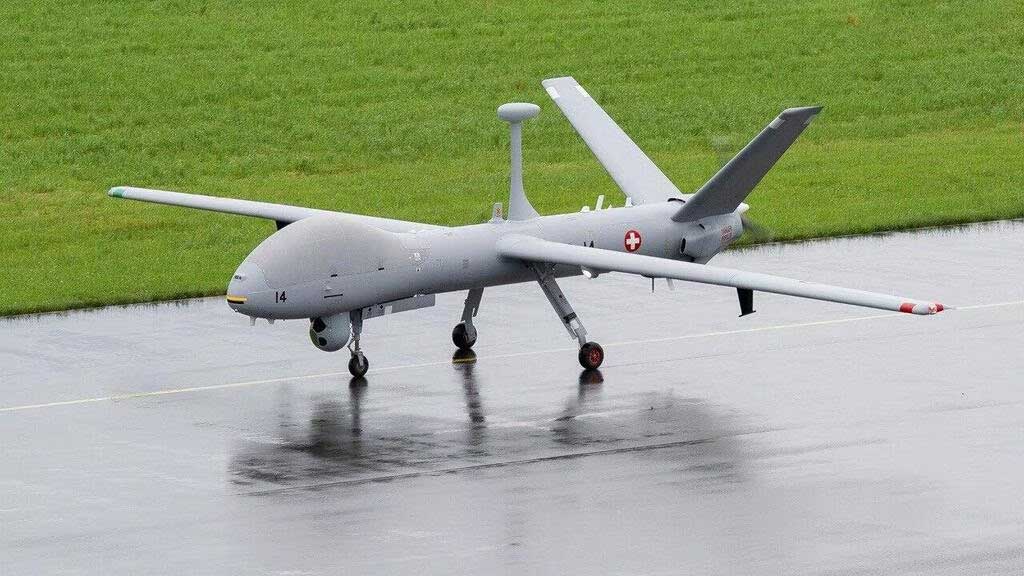
Misi pengintaian strategis bernilai tinggi dan operasi jarak jauh sering kali melibatkan drone canggih. Hermes 900, yang dioperasikan oleh Angkatan Udara Swiss, memiliki label harga sekitar USD 40 juta per unit dan menawarkan muatan yang lebih kecil daripada .
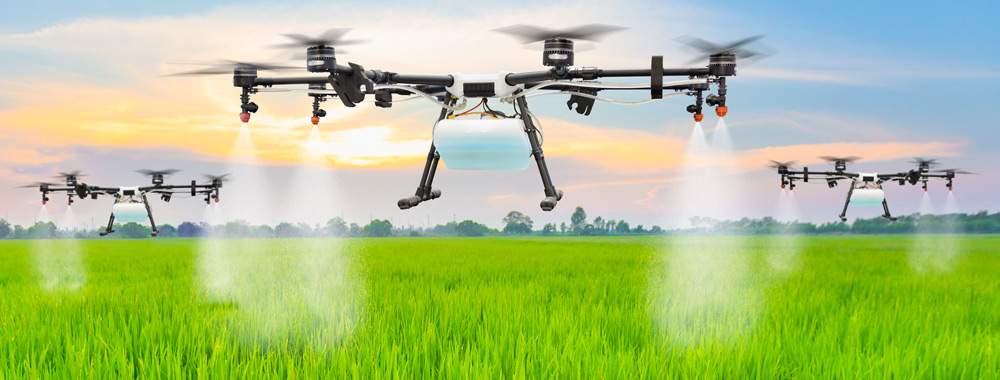
Drone penyemprot tanaman jarak dekat, dipandu GPS, dan sepenuhnya otomatis dapat menggunakan bahan kimia secara tepat di tempat yang dibutuhkan dan beroperasi beberapa meter di atas tanah tanpa mengganggu lalu lintas udara. Untuk alasan keamanan, drone ini biasanya hanya dioperasikan oleh entitas bersertifikat (pemerintah).
membayangkan masa depan yang memadukan pesawat terbang, drone, dan teknologi lainnya di angkasa.
Pengoperasian drone mengalihkan kendali penerbangan ke stasiun darat jarak jauh, tetapi semua tanggung jawab pilot tradisional tetap ada. Oleh karena itu, pengoperasian drone membutuhkan personel khusus tambahan, teknologi canggih, dan logistik, koordinasi, dan kepemimpinan yang terpisah.
Akibatnya, operasi drone menjadi lebih kompleks dan mahal, menuntut koordinasi yang canggih, kontrol penerbangan dan sistem komunikasi yang aman dan aman dari kegagalan, teknologi yang dapat dirasakan dan dihindari, serta protokol keselamatan dan redundansi yang lebih baik untuk memitigasi potensi kegagalan dan risiko.
Efektivitas, efisiensi, dan ketahanan yang tinggi bergantung pada interoperabilitas sistem, operasi bersama, dan perpaduan teknologi yang optimal yang diselaraskan dengan persyaratan misi, kendala, serta kebutuhan jangka panjang dan kemampuan operator atau negara.
Oleh karena itu, diskusi tentang drone yang menggantikan pesawat yang dipiloti mengabaikan poin mendasar dalam analisis keseluruhan. Singkatnya, manfaat dari operasi yang dipiloti lebih besar daripada drone tanpa pilot untuk sebagian besar kasus penggunaan.
Grafik radar memberikan gambaran umum tentang kinerja dan kesesuaian untuk berbagai misi. Meskipun berfungsi sebagai perbandingan yang mungkin tampak seperti "apel dan jeruk," namun secara efektif menyoroti kekuatan dan dengan jelas menunjukkan keserbagunaan dan kegunaannya. Grafik harus ditafsirkan secara kualitatif; untuk informasi yang lebih tepat, silakan hubungi kami.
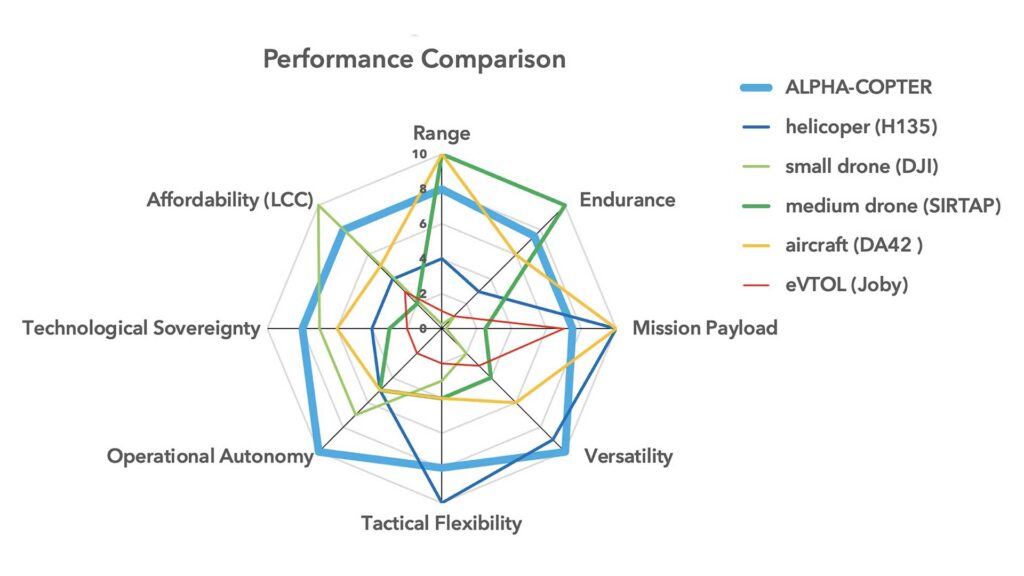
Jangkauan: Jarak maksimum yang dapat ditempuh kendaraan dalam satu kali pengisian atau tangki bahan bakar. Mesin kembar dapat beroperasi jauh melampaui keterbatasan jangkauan helikopter konvensional.
Daya tahan: Total waktu yang dibutuhkan kendaraan untuk tetap berada di udara sebelum perlu mengisi bahan bakar atau mengisi ulang daya, termasuk waktu cadangan. akan mengungguli semua helikopter dalam hal ketahanan.
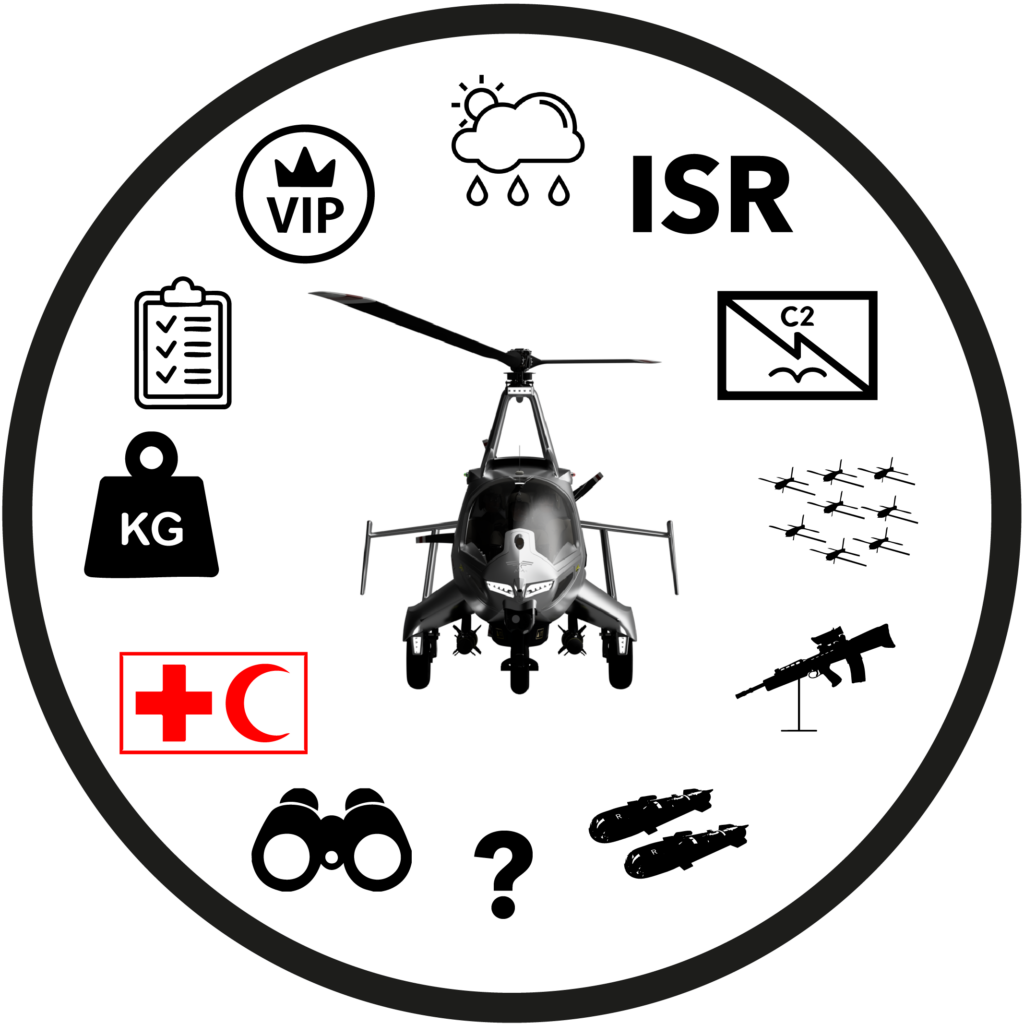
Muatan Misi: Berat maksimum yang dapat dibawa oleh kendaraan, termasuk penumpang, kargo, peralatan misi, dan sistem persenjataan. memiliki kapasitas muatan sedang yang ideal untuk mendukung unit bergerak.
Keserbagunaan: Kemampuan untuk melakukan berbagai jenis misi tanpa waktu henti yang signifikan untuk konfigurasi ulang. dirancang untuk keserbagunaan dan dapat beradaptasi dengan perubahan kebutuhan misi.
Fleksibilitas Taktis: Kemampuan untuk beradaptasi dengan cepat dalam penerbangan terhadap berbagai jenis misi dan perubahan operasional. dapat dengan cepat menyesuaikan diri secara real-time dengan pilot dan petugas penerbangan taktis di dalam pesawat.
Otonomi Operasional: Sejauh mana kendaraan dapat beroperasi secara mandiri tanpa kontrol atau infrastruktur eksternal. dirancang untuk beroperasi dari Pangkalan Operasi Depan (Forward Operating Base/FOB), sehingga memperluas jangkauan pasukan khusus atau ekspedisi.
Kedaulatan Teknologi: Kapasitas untuk mengembangkan, memanfaatkan, dan mengendalikan teknologi secara mandiri.
Kontrol penuh: dapat beroperasi tanpa ketergantungan atau kerentanan asing.
Keterjangkauan (LCC): Total biaya kepemilikan dan pengoperasian selama siklus hidup kendaraan. menawarkan biaya siklus hidup yang sebanding dengan biaya kendaraan darat, bukan pesawat terbang.
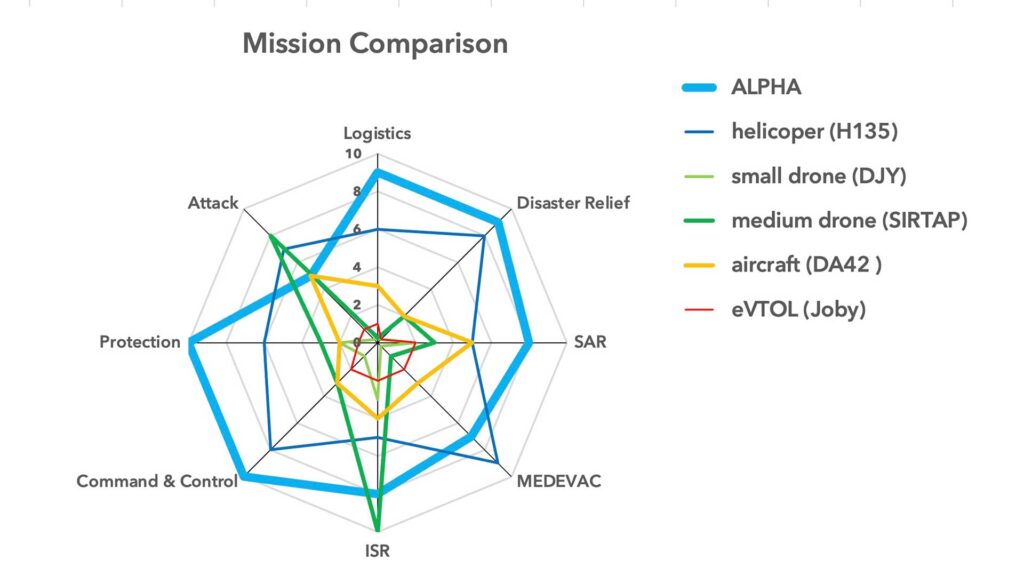
Logistik: Pergerakan dan penyimpanan barang dan personel untuk operasi yang efisien. memfasilitasi transportasi pasokan yang cepat di lingkungan yang menantang.
Bantuan Bencana: Dukungan kemanusiaan selama dan setelah bencana ketika infrastruktur tradisional terganggu. dirancang untuk memberikan bantuan dalam kondisi yang sulit.
SAR (Pencarian dan Penyelamatan): Operasi untuk mencari dan membantu individu yang berada dalam kesulitan. dibangun untuk operasi pencarian ekstensif di area yang luas.
MEDEVAC (Evakuasi Medis): Mengangkut orang yang terluka atau sakit ke fasilitas medis. memastikan evakuasi medis yang tepat waktu dengan jangkauan dan kemampuan respons yang cepat.
ISR (Intelijen, Pengawasan, dan Pengintaian): Pengumpulan dan analisis informasi untuk keputusan strategis. melakukan operasi rahasia, mengumpulkan intelijen yang berharga tanpa memberi tahu potensi ancaman.
Perintah & Kontrol: Mengarahkan kekuatan dan sumber daya untuk mencapai tujuan. meningkatkan kesadaran situasional dan mendukung hingga 2 petugas penerbangan taktis di dalam pesawat.
Perlindungan: Melindungi personel dan sumber daya dari ancaman. dirancang untuk misi keamanan dan anti-drone, memastikan transportasi yang aman dan pengawalan konvoi di area berisiko tinggi.
Serang: Tindakan ofensif yang dilakukan terhadap target untuk memenuhi tujuan militer. 'Hardpoint memungkinkan serangan presisi, menetralkan ancaman sekaligus meminimalkan kerusakan tambahan dan jejak militer.
Kami membayangkan masa depan operasi udara sebagai 'sistem sistem' yang terintegrasi di semua ranah. Oleh karena itu, sangat penting untuk memilih teknologi yang tepat untuk setiap misi untuk menyeimbangkan secara optimal antara keselamatan, efektivitas, efisiensi biaya, ketahanan, keberlanjutan, dan parameter lainnya.
, helikopter atau drone?
Mari bandingkan teknologi yang berbeda dan pertimbangkan skenario misi di mana area tertentu perlu dipantau untuk mencegah penyelundupan dan pelanggaran wilayah.
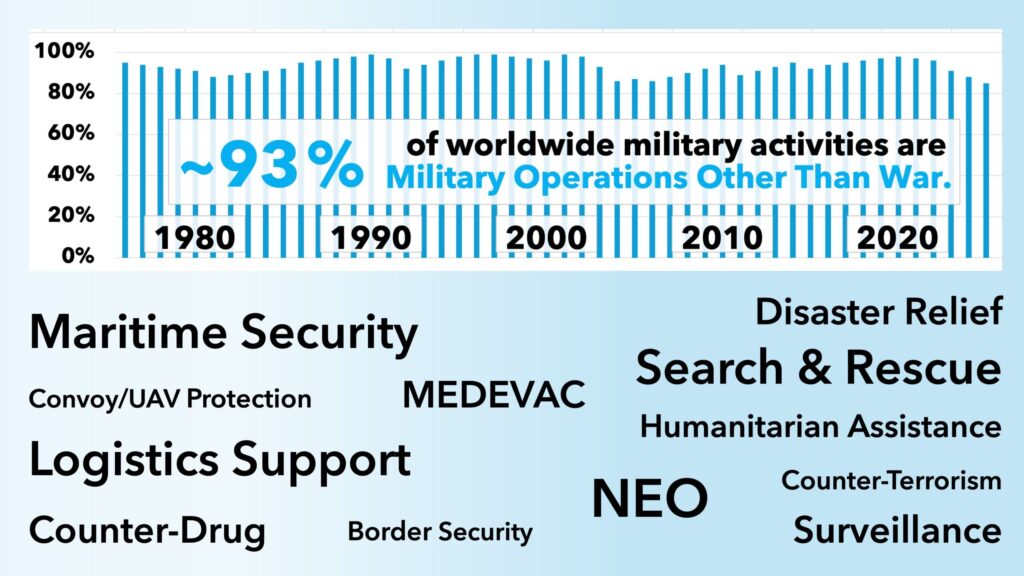
- Situasi Keamanan: Selaras dengan Operasi Militer Selain Perang (MOOTW)
- Misi: Pengawasan, Patroli, Intersepsi Bersenjata
- Teater Operasi: Termasuk terbang di atas kota, laut, dan hutan; diperlukan pesawat bermesin ganda
- Durasi: Kehadiran terus menerus selama satu bulan, 24/7
- Lapangan Terbang Terdekat: Berjarak 200 km dari Theatre of Operations (ToO)
- FOB (Forward Operating Base) dengan TLZ (Zona Pendaratan Sementara, misalnya lapangan sepak bola atau area pantai), yang terletak 100 km dari ToO.
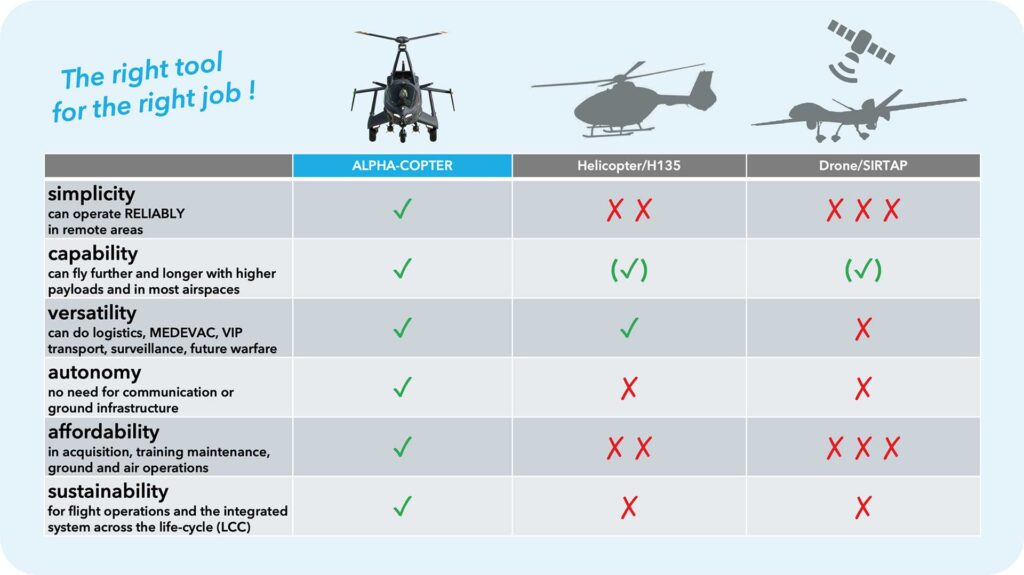
| (mesin kembar) | Helikopter (mis. H135) | Drone (mis. MALE/SIRTAP) |
|---|---|---|
| Operasi dan pemeliharaan berbasis FOB | Dapat diisi bahan bakar di FOB; membutuhkan perawatan di lapangan terbang | Membutuhkan lapangan terbang dan infrastruktur komunikasi |
| Daya tahan: 8 jam; Kecepatan: ~200 km/jam; Jangkauan: 1.500 km | Daya tahan: 3 jam; Kecepatan: ~200 km/jam; Jangkauan 600 km | Daya tahan: 18 jam; Kecepatan: ~200 km/jam; jangkauan: 2.200 km |
| Ketersediaan operasional: 90% | Ketersediaan operasional: 70% | Ketersediaan operasional: 80% |
| Mengorbit selama 6 jam di Theatre of Operations (ToO), dengan 1 jam perjalanan dan 1 jam cadangan. | Mengorbit selama 1 jam di Theatre of Operations (ToO), dengan 1 jam perjalanan dan 1 jam cadangan. | Mengorbit selama 15 jam di Theatre of Operations (ToO), termasuk 2 jam perjalanan dan 1 jam cadangan. |
| 120 misi penerbangan per bulan dengan (30 hari * 24 jam / 6 jam) 840 jam | 720 misi penerbangan per bulan dengan (30d * 24 jam / 1 jam) 1.440 jam | 48 misi penerbangan per bulan dengan (30 hari * 24 jam / 15 jam) 816 jam |
| Persyaratan minimum: Diperlukan 3 ALPHA-COPTER | Persyaratan minimum: Dibutuhkan 4 helikopter | Persyaratan minimum: Diperlukan 3 sistem drone |
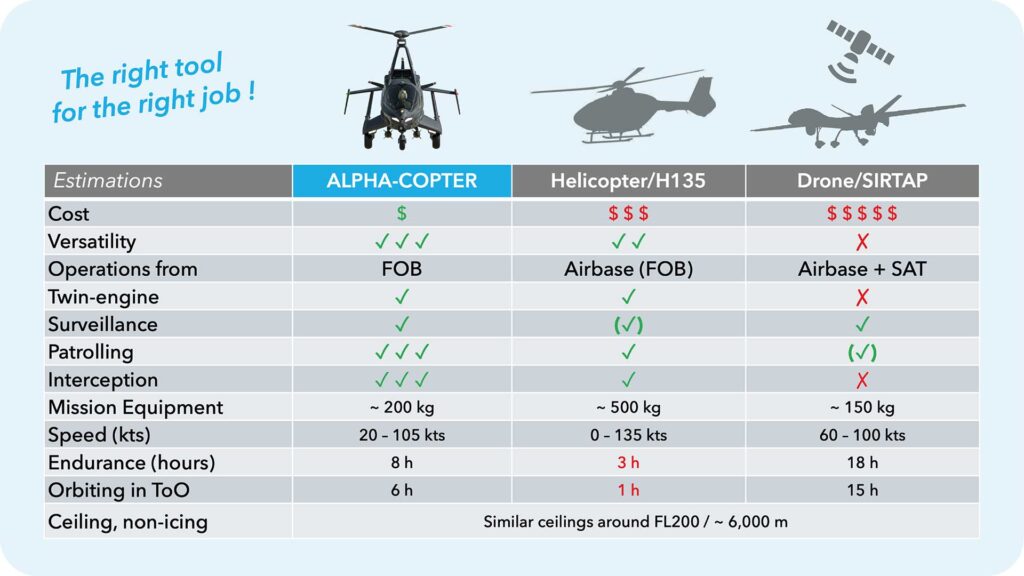
Ketiga sistem yang berbeda ini didesain dengan kekuatan yang berbeda. menonjol karena keserbagunaan dan efisiensi biayanya, sementara helikopter unggul dalam kemampuan melayang, dan drone tertentu memberikan durasi penerbangan yang lebih lama. Penting untuk dicatat bahwa aturan keterlibatan internasional biasanya membatasi drone untuk melakukan misi pencegatan; namun, drone sering kali sangat efektif dalam operasi pengawasan dan serangan.
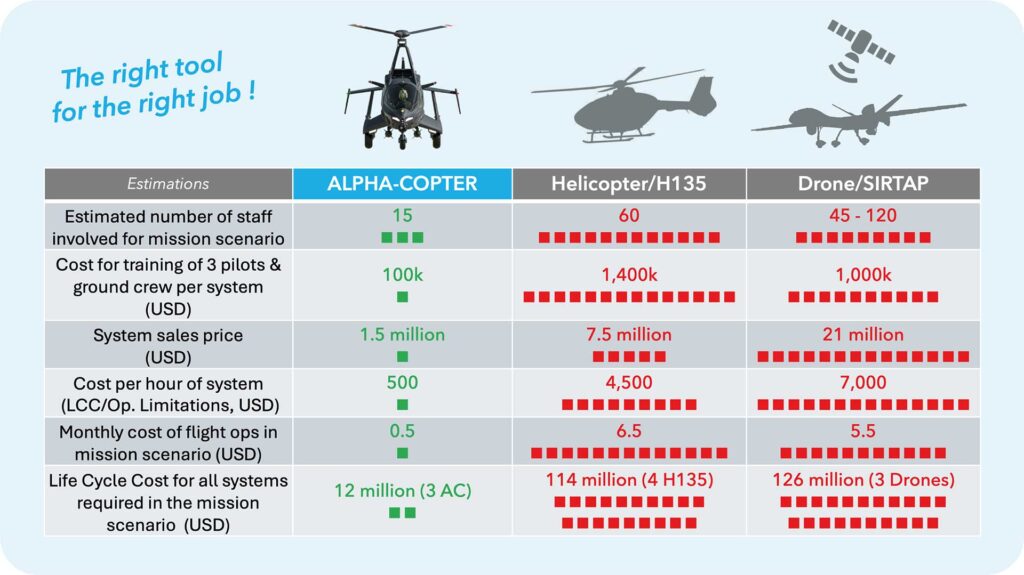
Keterangan
LCC (Life Cycle Cost) mencakup semua biaya, seperti bahan bakar, perawatan, tambahan, pelatihan dan gaji kru, biaya hanggar, asuransi, penyusutan, dan biaya terkait lainnya yang terjadi selama masa pakai aset.
Operasi Udara Multi-Platform yang Dioptimalkan
Dalam skenario MOOTW dan perang asimetris di masa depan, pengerahan aset udara yang dinamis dan lincah sangat penting. Pendekatan terintegrasi ini mengoptimalkan efektivitas, efisiensi, dan manajemen sumber daya. Pendekatan ini juga memastikan de-eskalasi yang tepat dan meningkatkan skalabilitas pasukan.
The bertindak sebagai pengganda kekuatan utama. Pesawat ini beroperasi di sebagian besar wilayah udara, diawaki oleh seorang pilot dan satu atau dua Perwira Penerbangan Taktis. Kapasitas tenaganya, mirip dengan helikopter bermesin ganda, mendukung pengacau drone, sistem persenjataan, dan berbagai pod sensor. Hal ini memungkinkan pengumpulan dan pemrosesan data di dalam pesawat yang terintegrasi.
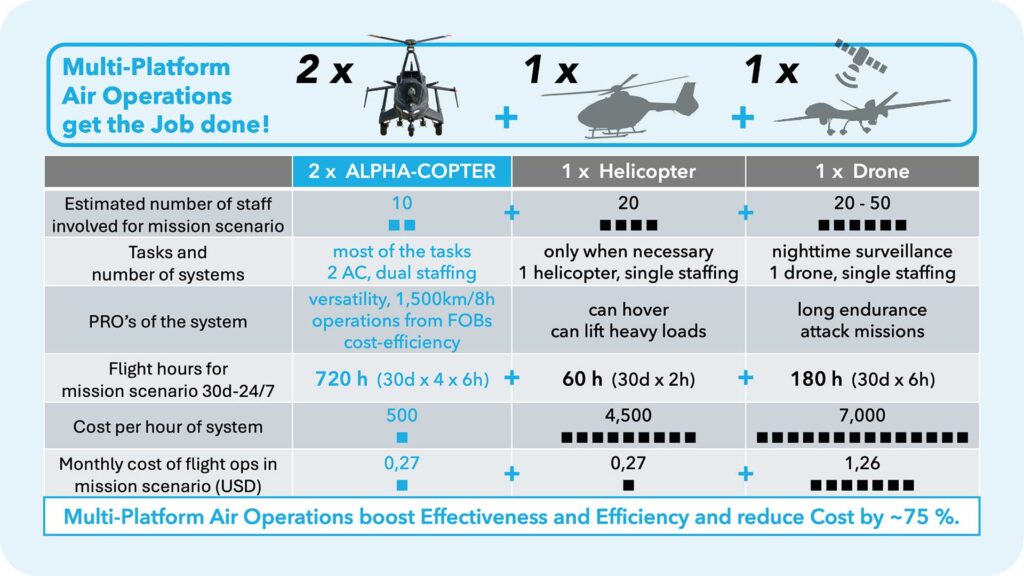
Kemampuan ini secara langsung meningkatkan Digital Common Operational Picture (COP), sebuah enabler yang sangat penting bagi Network-Centric Warfare (NCW). Sebagai akibatnya, sistem mengurangi beban operasional pada platform lain. Strategi yang umum digunakan adalah untuk tugas patroli, proyeksi kekuatan, dan intersepsi.
Drone menyediakan pengawasan (malam hari), terutama ketika kebutuhan intersepsi berkurang. Helikopter tetap siaga untuk tugas-tugas yang membutuhkan pengangkatan berat atau kemampuan melayang. Strategi gabungan ini menjamin daya tahan operasional yang berkelanjutan dan pelestarian aset strategis.
Efisiensi adalah kemampuan untuk mencapai produktivitas maksimum sambil meminimalkan sumber daya yang terbuang, menekankan optimalisasi proses-pada dasarnya, penggunaan bahan bakar, peralatan, uang, tenaga kerja, dan banyak lagi secara efektif.
Efektivitas, di sisi lain, berfokus pada keberhasilan mencapai tujuan dan sasaran yang diinginkan, memastikan bahwa tugas-tugas diselesaikan sesuai kebutuhan.
Menggabungkan Efisiensi dan Efektivitas
Memastikan operasi yang efisien sumber daya dan berorientasi pada tujuan - apakah mengungguli helikopter?
unggul dalam efisiensi di hampir semua skenario, dengan pengecualian untuk mengangkut beban berat atau melayang. Namun, penelitian di antara operator militer dan sipil menunjukkan bahwa operasi khusus ini relatif jarang terjadi, hanya terjadi pada 10% hingga 40% penerbangan helikopter, tergantung pada operatornya.
Dalam hal efektivitas, metode unggul dalam penerbangan yang lebih lama, menawarkan kapasitas muatan yang lebih besar karena konsumsi bahan bakarnya yang minimal, dan kemampuan terbang dua kali lebih lama dan dua kali lebih jauh dari helikopter. Hal ini diilustrasikan dalam grafik yang menyertainya:

Melampaui kinerja operasional, juga memberikan keuntungan yang signifikan dalam hal efisiensi biaya jangka panjang terkait perizinan. pilot membutuhkan waktu sekitar tiga bulan dan biaya sekitar USD 20.000 - hanya sebagian kecil dari biaya dan waktu yang dibutuhkan untuk melatih pilot helikopter bermesin ganda.
Namun, pembentukan kumpulan staf yang kuat membutuhkan perencanaan strategis, yang membutuhkan integrasi pemangku kepentingan sejak dini, penyelarasan peraturan, dan pemilihan instruktur serta awak darat dan udara di masa depan. Meskipun kualifikasi individu dipercepat, membangun jalur pilot yang tangguh membutuhkan infrastruktur organisasi dan instruksional yang komprehensif, sebuah usaha yang membutuhkan waktu bertahun-tahun.
 English
  German
  French
  Spanish
  Indonesian